New Tourism Development: Why the Swimming Pool and Outdoor Areas Must Be Considered from the Initial Stage
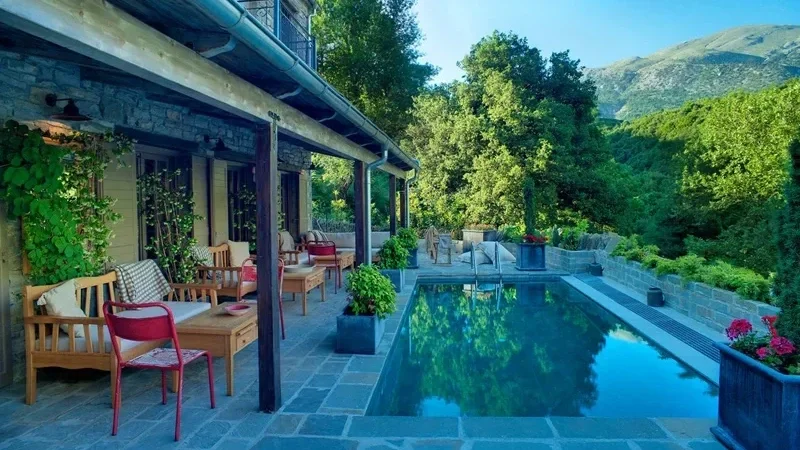
1. The Swimming Pool Is Not an Addition to the Property. It Is Part of Its Concept
Every serious tourism development is based on a central concept: how the property will be positioned within the market and the type of experience it will offer its guests.
A property may be defined by its relationship with the sea, its privacy, the tranquillity of the natural landscape, contemporary architecture or a more social resort experience. In every case, the swimming pool cannot operate independently of this direction.
In a coastal resort, it may strengthen the visual continuity between the water and the horizon. In a boutique hotel, it may create a sheltered relaxation area with a more personal character. In a villa development, it may become a defining element of privacy and differentiation for each individual residence.
The form and position of the swimming pool, together with its relationship to the building and the surrounding landscape, directly influence how guests perceive the property as a whole. For this reason, the pool should not be considered solely as a technical installation. It must be approached as part of the project’s original architectural and commercial identity.
When this decision is made at an early stage, the outdoor environment does not simply attempt to complement the building. It completes it.
2. Early Planning Protects Architectural Cohesion
The quality of a high-specification project is largely determined by its cohesion: whether its spaces, materials, circulation routes and experiences appear to have been designed as parts of the same concept.
The swimming pool and the surrounding outdoor environment influence several critical aspects of this cohesion:
the relationship between interior and exterior spaces,
the views from guest rooms and communal areas,
relaxation and circulation zones,
the selection of surfaces and materials,
privacy or the sense of openness,
the property’s connection with the view and natural environment.
When these decisions are considered from the earliest stage, the swimming pool can be given the appropriate position, scale and presence within the project. The architectural design can anticipate its relationship with the rooms, villas, restaurants, viewpoints and main guest circulation routes.
By contrast, when the swimming pool is addressed later as a remaining element of the outdoor works, its construction must adapt to restrictions that may prevent it from fulfilling its intended role.
In a premium property, quality should not result from corrective measures. It should be embedded within the project’s original design logic.
3. The Outdoor Environment Determines How the Swimming Pool Is Experienced
The presence of a swimming pool alone is not enough to create a complete outdoor experience. The organisation of the area around it determines whether the installation will function as a genuine advantage for the property.
The outdoor environment influences arrival, circulation, relaxation, privacy, views and the overall sense of comfort. It affects the way guests move from their room or villa towards the pool, how they choose to spend time within the area and the extent to which their experience feels natural, calm and complete.
In a hospitality project, outdoor areas do not serve only one function. They may need to support different times of day, different types of guests and different experiences: tranquillity, social interaction, views, dining, privacy or family use.
The development of the outdoor environment must therefore begin with an understanding of these requirements. Material selection, circulation surfaces, relaxation areas and their relationship with the pool are not merely aesthetic additions. They are decisions that determine the functionality and quality of the experience.
For a tourism development, this experience forms part of its value. Guests may not be aware of the decisions that created it. They immediately recognise, however, whether an environment has been properly organised or whether it is simply a collection of separate constructions.
4. Hotel Operations Must Be Considered Before Construction Begins
A swimming pool within a commercial hospitality property is not used in the same way as a private residential pool. It must accommodate a specific number of guests, support daily operations and maintenance requirements and maintain a consistent visual standard throughout the property’s operating season.
This means that decisions regarding the swimming pool and the surrounding outdoor environment cannot be based exclusively on form or photographic impact. They must be evaluated in relation to the property’s actual operating model.
In a large resort, a central swimming pool may become an area of high guest concentration and an important part of daily operations. In a development featuring suites and villas, the project may require multiple independent installations, increased privacy and greater consistency in the repetition of quality. In a boutique hotel, the outdoor space may be smaller, but carry even greater importance in defining the property’s identity and guest experience.
Early collaboration makes it possible to address the right questions:
What will be the actual role of the swimming pool within the property’s operation?
Which categories of guests must it accommodate?
How will the surrounding area be organised?
What level of privacy, circulation and relaxation space is required?
How will the operation and quality of the environment be supported over time?
When these questions are answered before construction begins, the project can be developed with significantly greater clarity, confidence and control.
In a new hotel or tourism development, certain decisions influence the project far more significantly than may initially appear. The swimming pool and the surrounding outdoor areas are among them.
They are not features that can simply be added once the fundamental design of the property has been completed. They influence the operation of the establishment, its technical infrastructure, the hospitality experience and, ultimately, the commercial identity of the entire project.
In a hotel, resort or complex of tourism villas, the outdoor environment is often where the standard of the property becomes most clearly visible. It is where guests perceive its relationship with the landscape, the quality of its materials, the comfort of the environment and the consistency between the architecture and the experience the property seeks to provide.
When the swimming pool and the surrounding area are incorporated into the design process at an early stage, they can meaningfully support the character and value of the development. When they are addressed at a later stage, the available options become limited, and the final result must often adapt to decisions that were made without considering their requirements.
For a high-specification hospitality investment, the right time to consider the swimming pool is not when the remaining outdoor space needs to be developed. It is when the identity of the project itself is being defined.
Planning a Hospitality Project or Tourism Development?
The right decisions regarding the swimming pool are made before construction begins.
Angel Pool works with hotels, resorts and developers on projects where swimming pool construction and outdoor space development require technical expertise, operational foresight and aesthetic consistency.
Tell Us About Your Project
5. Technical Infrastructure Must Be Planned as Part of the Development
A swimming pool is not only a visible architectural feature. It depends on a complete system of technical infrastructure that must be properly integrated into the wider development: the plant room, hydraulic networks, electrical systems, drainage, maintenance access and connections with the property’s other installations.
When these requirements are considered from the beginning, they can be positioned and organised in a way that supports efficient operation without compromising the architecture or the guest experience. The plant room can be given suitable access, service routes can be planned effectively and the installation can be incorporated into the project without unnecessary interventions or visible compromises.
When the swimming pool is introduced at a later stage, however, it often has to adapt to conditions that have already been established. Limited available space, excessive distances from the technical equipment, difficult access or incompatibility with other building systems can increase the complexity of construction and affect long-term performance.
In a commercial hospitality property, the technical infrastructure should not simply remain visually discreet. It must operate reliably, allow effective inspection and support the daily management of the property for many years.
6. Early Planning Reduces Changes, Delays and Additional Costs
In every complex construction project, decisions that are changed at a later stage are generally more difficult and more expensive than those properly assessed during the design process.
The position, form and technical organisation of the swimming pool affect excavation works, level differences, retaining structures, utility networks, circulation routes and the development of the entire outdoor area. When these elements have not been coordinated in advance, changes may be required to designs or structures that have already been completed.
An early and integrated approach allows for:
better coordination between architects, engineers and construction teams,
a clearer definition of technical requirements,
a more accurate assessment of the true project cost,
fewer changes during construction,
more effective programme and schedule management,
more consistent selection of materials and construction solutions.
The value of this process lies not only in preventing problems. It also allows the project to progress with greater clarity, without the swimming pool and outdoor areas becoming a series of corrective decisions during construction.
For a developer or hotel owner, this level of preparation protects both the quality of the result and the financial organisation of the investment.
7. Licensing and Operational Requirements Must Be Considered Early
The construction and operation of a swimming pool within a hotel, resort or other hospitality property are connected to technical, planning and operational requirements that should be considered from the earliest stage.
The position and characteristics of the pool, its supporting facilities, ground formation and required infrastructure may affect the design and licensing process of the wider development. At the same time, commercial operation creates specific requirements relating to safety, water quality, circulation, maintenance and daily supervision.
Early cooperation with the appropriate consultants and technical specialists allows the actual requirements of the project to be identified before critical decisions are finalised.
This makes it possible to assess:
the suitability of the proposed location,
the required structural and electromechanical infrastructure,
access to the plant and technical equipment,
water management and drainage,
safety and operational requirements,
compatibility with the approved designs of the property.
Licensing should not be treated as a process that follows an already completed design. It forms part of the technical direction of the development and may significantly influence the available options.
8. The Swimming Pool and Outdoor Areas Influence the Property’s Market Positioning
In a new hospitality development, the swimming pool and outdoor environment do not influence only the operation of the property. They also contribute to the way it is presented, differentiated and perceived in the market.
For many hotels and resorts, the outdoor environment is one of the strongest elements of their visual identity. It appears across the website, booking platforms, social media channels and the wider promotional material of the property.
The value of this image, however, is not created by an impressive swimming pool alone. It is created through the consistency of the overall experience: the relationship with the landscape, the architecture, the view, the areas of residence and relaxation, and the standard of hospitality the property aims to communicate.
When the outdoor environment is properly designed from the beginning, it can strengthen:
the guest’s first impression,
the differentiation of the property from competing developments,
the market appeal of particular room, suite or villa categories,
the perception of quality and consistency throughout the property,
its ability to achieve a premium market position,
the long-term value of the overall development.
Decisions concerning the swimming pool should therefore not be based solely on construction cost or visual impact. They should be assessed in relation to the property’s broader commercial strategy and the experience the operator intends to offer.
9. The Right Collaboration Begins Before the Design Is Finalised
The involvement of a specialist swimming pool contractor provides the greatest value when it begins before the architecture, infrastructure and outdoor areas have been finalised.
At this stage, there is still an opportunity to assess alternative options, understand their technical implications and select the direction that best supports the operation, aesthetics and budget of the project.
Early collaboration between the owner or developer, architect, engineers, construction team and specialist swimming pool contractor can help ensure that:
the position and form of the swimming pool support the overall concept,
technical infrastructure is properly integrated into the property,
the outdoor environment is organised as a cohesive experience,
operational requirements are considered before construction begins,
materials and construction methods remain consistent with the standard of the project,
the agreed design can be delivered without unnecessary compromises.
In a high-end hospitality development, quality does not result from the isolated success of individual works. It results from the way every team and every decision supports the same overall direction.
The Swimming Pool as Part of the Development Strategy
The swimming pool and its surrounding outdoor environment form an important part of the overall experience of a hotel, resort or villa development. They influence the architecture, operation, technical infrastructure, presentation and commercial positioning of the property.
When they are considered from the earliest stage, they can be integrated naturally into the wider development and effectively support its character. When they are introduced later, the available options become more limited and the installation is often forced to adapt to decisions that were made without considering its requirements.
Proper planning does not simply mean designing the swimming pool earlier. It means treating it as an essential part of the investment rather than as a technical task that remains to be completed.
The Angel Pool Approach
Since 1992, Angel Pool has specialised in swimming pool construction and outdoor space development for hospitality projects and private properties.
For new hotel and tourism developments, our approach is based on understanding the project at an early stage, coordinating with the teams involved and providing the technical direction required to integrate the swimming pool and outdoor environment properly into the overall development.
The objective is not simply to construct a swimming pool. It is to create an outdoor environment that supports the operation of the property, expresses its architectural identity and preserves its quality and value over time.
Angel Pool